
AI's Physical Intelligence Gap: Can Robots Catch Up?
We are living through a strange contradiction in technology. We have AI that can pass the Bar Exam, write complex code in seconds, and beat the world's best players at Go. Yet, if you ask a robot to walk into a messy room, identify a dirty sock, and put it in the hamper, it struggles immensely.
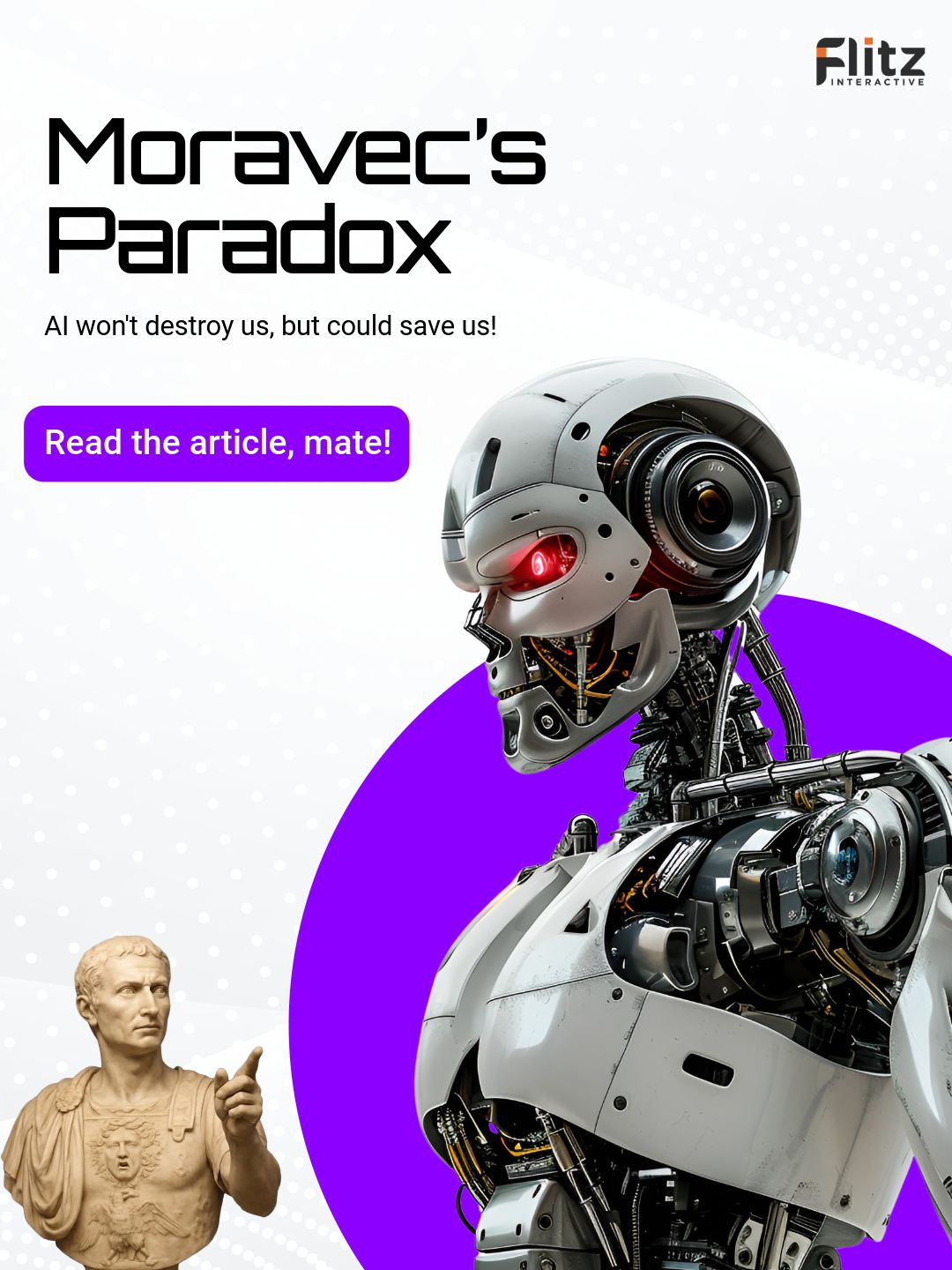



Why is it easier to build an AI Grandmaster than an AI that can fold laundry?
We are living through a strange contradiction in technology. We have AI that can pass the Bar Exam, write complex code in seconds, and beat the world's best players at Go. Yet, if you ask a robot to walk into a messy room, identify a dirty sock, and put it in the hamper, it struggles immensely.
Moravec's Paradox
This is known as Moravec's Paradox.
Formulated in the 1980s by Hans Moravec and others, the principle states: "It is comparatively easy to make computers exhibit adult level performance on intelligence tests or playing checkers, and difficult or impossible to give them the skills of a one-year-old when it comes to perception and mobility."
Why does this happen?
It comes down to evolution.
High-level reasoning (math, logic, strategy) is a very recent human development. It requires conscious effort, making it easier to reverse-engineer into rules and code.
Sensorimotor skills (seeing, walking, grasping) have been optimized over billions of years of evolution. They are unconscious to us, but computationally massive for a machine.
The Path Forward
We've conquered the "hard" stuff (Calculus). Now, AI is finally trying to learn the "easy" stuff (Physical reality).
As we move from LLMs (Large Language Models) to LMMs (Large Multimodal Models) and advanced robotics, we are finally attacking the other side of the paradox.
Do you think we will solve the "physical intelligence" gap in this decade? Or will robots remain clumsy while their digital brains become geniuses?